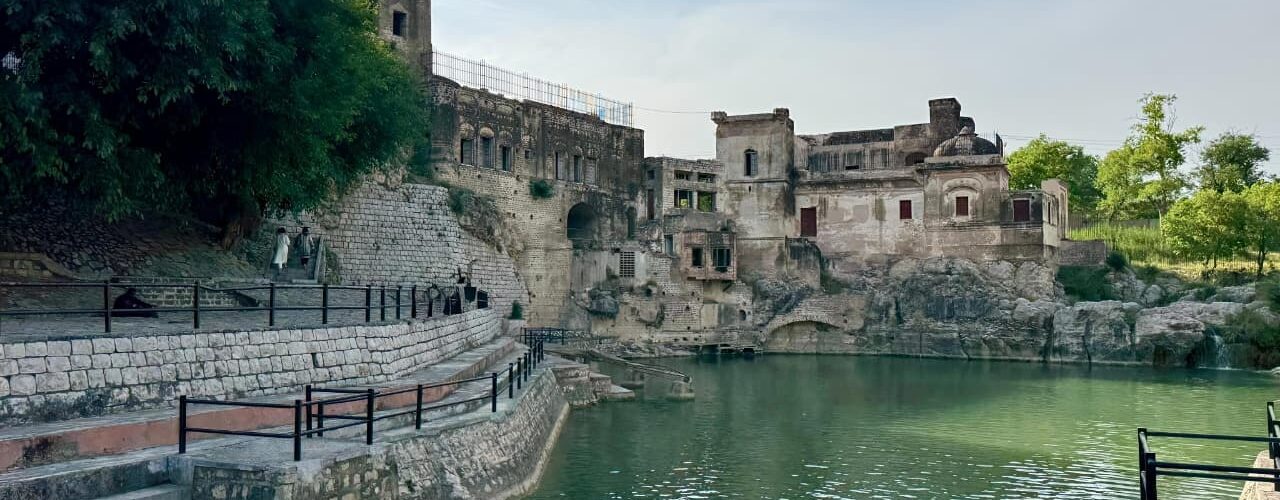
In the heart of Punjab’s Chakwal district lies one of Pakistan’s most ancient and spiritually significant sites, the sacred complex of Katas Raj Temple. Known for its deep religious importance in Hinduism and its breathtaking historical landscape, the temple offers a powerful blend of history, mythology, and cultural harmony.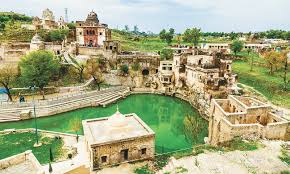
I recently had the opportunity to visit the Katas Raj Temple with my friends. Like many others, I was not fully aware of its depth, history, and significance before this trip. The visit turned into a memorable experience that combined exploration, learning, and reflection. We decided to take a break from our busy office routines and explore something meaningful, a historical place that could connect us with the past. Despite the intense summer heat, with temperatures crossing 40°C, we chose to continue our journey. What started as a simple plan among friends turned into an unforgettable experience.
 A complex rich in history and sacred sites
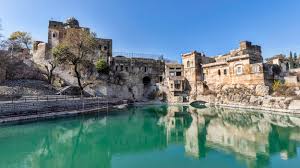
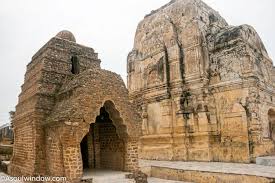
The Katas Raj Temple complex is not just a single temple but a collection of several ancient religious and historical structures. Within the complex, there are multiple sacred sites, including Shri Shiv Mandir, Shri Ram Mandir, Shri Hanuman Mandir, and several smaller shrines dedicated to Hindu deities.
The site also includes ancient remains such as a Baradari, caves, a stupa, old pathways, and historical structures believed to date back thousands of years. These caves were once used by sages, Sadhus, and spiritual seekers for meditation and penance. According to historical accounts, the region also has links with early scholars. One of the most significant associations is with the great scholar Al-Biruni, who is believed to have studied Sanskrit in this region before documenting his famous work Kitab-ul-Hind. This connection adds academic and historical depth to the site, making it important not just religiously but also intellectually.
Mythology and sacred beliefs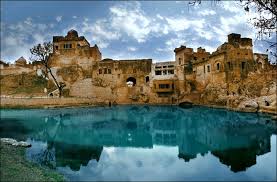
The temple complex holds deep significance in Hindu mythology. It is believed to be linked with the time of the Pandavas from the epic Mahabharata. According to tradition, the five Pandavas, Yudhishthira, Bhima, Arjuna, Nakula, and Sahadeva, along with Draupadi, are believed to have stayed in this region during their period of exile (Vanvas). At the center of the complex lies a sacred pond, which is considered highly holy in Hindu belief. According to mythology, when Goddess Sati passed away, Lord Shiva was deeply grief-stricken. It is believed that two tears from his eyes fell on earth and formed two sacred water bodies, one in India and the other at Katas Raj. This lake remains one of the most spiritually significant parts of the temple, attracting pilgrims from different parts of the world.
 A living place of worship
During our visit, we observed that Katas Raj is not just a historical monument but an active place of worship. Pilgrims from different countries, especially from India and within Pakistan, regularly visit the temple to perform rituals and prayers. We also met members of the Hindu community from Sindh who had come to offer their prayers. Interacting with them was a respectful and peaceful experience, reflecting the diversity and cultural harmony that still exists in Pakistan. Religious festivals such as Maha Shivratri are also celebrated here with devotion, where large gatherings of pilgrims take part in prayers and ceremonies.
Guided tour and local experience
Our visit became even more meaningful with a guided tour led by Pandit Naimat Chand, who belongs to Kohat and has been serving here for more than seven years. He shared detailed historical and religious information about the temple, which helped us better understand its heritage and significance. He also narrated local stories and beliefs associated with the site, explaining how visitors often come here with prayers and wishes. These accounts reflect the deep faith and respect people have for this sacred place.
Preservation and facilities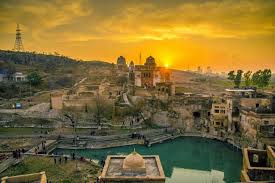
One of the most impressive aspects of the Katas Raj Temple is its maintenance and preservation. The site is well-managed, and efforts have been made to facilitate visitors. Facilities such as resting areas and food arrangements for pilgrims reflect the support provided by local authorities. Seeing such a well-preserved historical site left a strong impression.
A reflection of Pakistan’s tourism potential
 This visit made me realize the vast tourism potential that Pakistan holds, especially in Punjab. Places like the Katas Raj Temple are not only religious landmarks but also cultural treasures that can attract visitors from around the world. Pakistan is home to diverse historical sites representing multiple religions, civilizations, and eras. With better promotion and preservation, these places can play a major role in boosting cultural tourism.
A memorable experience
As we explored the temple complex, I also had the opportunity to capture photographs and record videos. The peaceful environment, combined with spiritual chants like Manqabat and Qawwali performed nearby, created a deeply emotional atmosphere. Overall, the visit was not just about sightseeing; it was about experiencing history, understanding faith, and appreciating cultural diversity. I would definitely like to visit the Katas Raj Temple again. It is a place where history speaks, faith lives, and heritage breathes together.